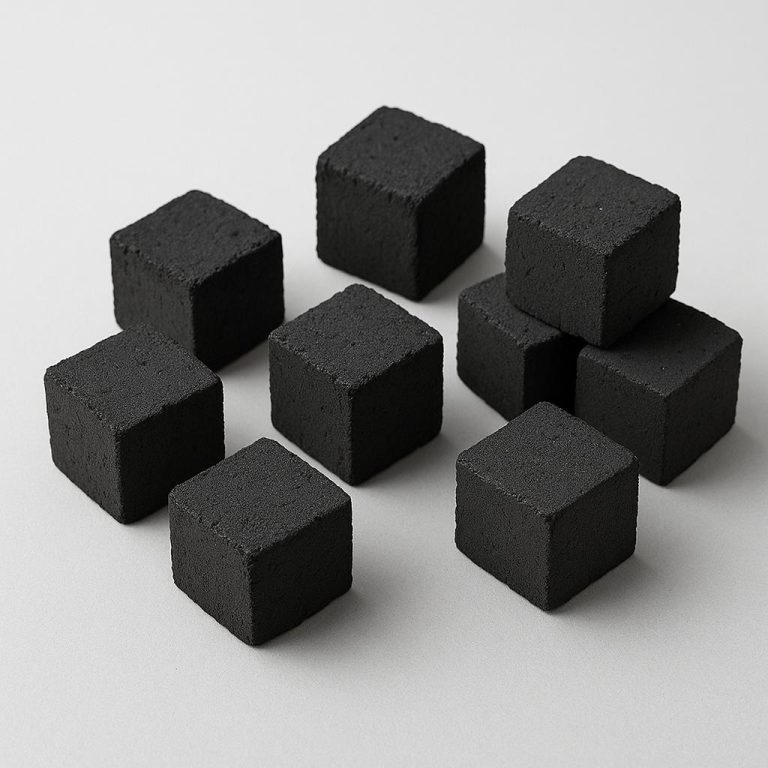
Cube charcoal delivers stable heat, longer burn time, and cleaner combustion for various cooking applications. Many professionals prefer its uniform structure. Moreover, restaurants demand predictable performance every day. Therefore, cube shaped briquettes continue to dominate global markets. In addition, their compact density improves storage efficiency. As a result, distributors handle bulk orders more effectively.
Why Cube Charcoal Performs Better Than Irregular Briquettes
First, cube charcoal offers consistent shape and size. Consequently, users arrange the pieces evenly inside grills. Furthermore, uniform spacing improves airflow circulation. This balanced oxygen supply supports complete combustion.
In contrast, irregular charcoal creates uneven heat zones. However, cube charcoal minimizes temperature fluctuation. Therefore, chefs maintain better cooking control. Moreover, steady heat improves food texture and flavor consistency.
Another advantage involves longer burn duration. High density cube charcoal burns slowly and steadily. As a result, users reduce refueling frequency. This efficiency supports commercial scale operations.
Additionally, cube design simplifies packaging and transportation. Manufacturers stack the briquettes securely. Consequently, breakage risk decreases during export shipments.
Production Standards Behind High Quality Cube Charcoal
Raw Material Selection Premium
Manufacturers begin with carefully selected coconut shells. Mature shells provide higher carbon content. Therefore, they produce stronger and denser briquettes.
Next, producers dry the raw materials thoroughly. Low moisture levels improve carbonization efficiency. As a result, the charcoal achieves better calorific value.
Compression and Finishing Process
After carbonization, factories grind the charcoal into fine powder. Then, they compress it into precise cube molds. Strong hydraulic pressure ensures compact structure. Consequently, each piece maintains durability during use.
Furthermore, consistent dimensions create predictable heat distribution. Many buyers choose coconut shell charcoal because of this uniform performance. These cubes fit perfectly in grills and hookah burners. As a result, users achieve steady combustion from start to finish.
Quality control teams also inspect density and ash content. Strict inspection guarantees export grade standards. Therefore, global buyers receive reliable specifications.
Applications of Cube Charcoal in Commercial Markets
Restaurants rely on cube charcoal for professional grilling operations. In addition, catering businesses require stable and long lasting heat. Therefore, cube briquettes support high volume cooking efficiently.
Hookah lounges also benefit from uniform cube structure. Clean combustion protects flavor quality. Moreover, low smoke production enhances customer comfort. Consequently, cube charcoal becomes a preferred option worldwide.
Exporters value its compact packaging advantages. Efficient stacking reduces shipping costs significantly. As a result, distributors maximize container capacity.
Partner with a Trusted Cube Charcoal Supplier
Selecting the right supplier ensures long term business stability. Therefore, companies must evaluate manufacturing capability carefully. Consistent production capacity prevents supply disruption.
You can explore premium products at neonagy .The company specializes in high density charcoal briquettes. Moreover, they apply strict quality control procedures. As a result, buyers receive uniform and durable products.
In addition, professional logistics management supports global distribution. Reliable delivery schedules strengthen international partnerships. Consequently, businesses maintain stable inventory levels.
Conclusion
Cube charcoal offers consistent heat, durable structure, and efficient combustion performance. Moreover, its uniform design supports professional and export requirements. Therefore, many industries rely on this practical fuel solution. By choosing a reliable supplier, businesses secure stable quality and long term growth opportunities.